
IGET ONE 12000 Puffs – Kiwi Pineapple Flavour Review
Introduction
When I come across a vaping product with a tropical fruit flavour name, one of the first things I look at is what the name actually tells us about the formulation.
The IGET ONE 12000 Kiwi Pineapple is an interesting example. Kiwi and pineapple are familiar fruits, but their flavour characteristics are quite different.
Kiwi is commonly associated with a slightly tangy, green-fruit profile, while pineapple is recognised for its distinctive tropical aroma and sweet-acidic character.
Combining those two names creates a recognisable flavour concept.
However, there is a difference between understanding the intended flavour profile and confirming how a manufactured vaping product actually tastes.
In this independent, research-based review, I'll explore the Kiwi Pineapple flavour concept, the commonly advertised features of the IGET ONE 12000, the meaning of its puff-count rating and the Australian regulations that readers should understand.
This is not a hands-on taste test.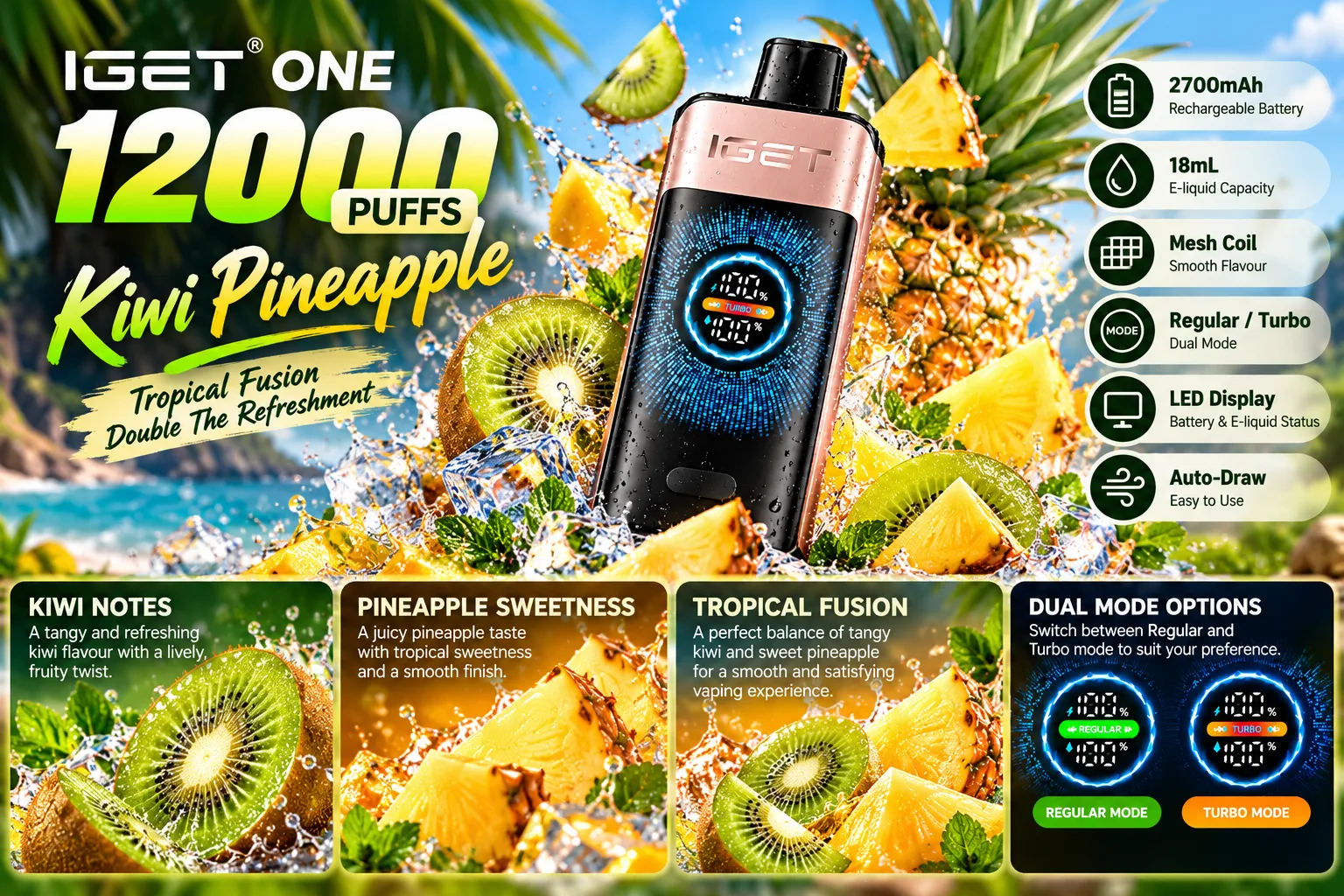
1. What Is IGET ONE 12000 Kiwi Pineapple?
Kiwi Pineapple is a named flavour variant associated with the IGET ONE 12000 vaping device family.
The product name contains two separate elements.
IGET ONE 12000 identifies the device range and its advertised maximum puff-count category.
Kiwi Pineapple identifies the intended fruit flavour concept.
The flavour name suggests a combination of kiwi-related and pineapple-related aromatic characteristics, but it does not confirm the exact ingredients used.
A manufactured fruit flavour may contain a blend of aromatic compounds rather than extracts from the fruits named on the packaging.
2. Understanding the Kiwi Flavour Concept
One reason kiwi is frequently used in mixed-fruit flavour descriptions is its balance of sweetness and acidity.
Fresh kiwi fruit is generally associated with:
Mild to moderate sweetness.
Noticeable tartness.
Green-fruit aromatic notes.
A slightly acidic finish.
The intensity of these characteristics depends on the fruit variety and ripeness.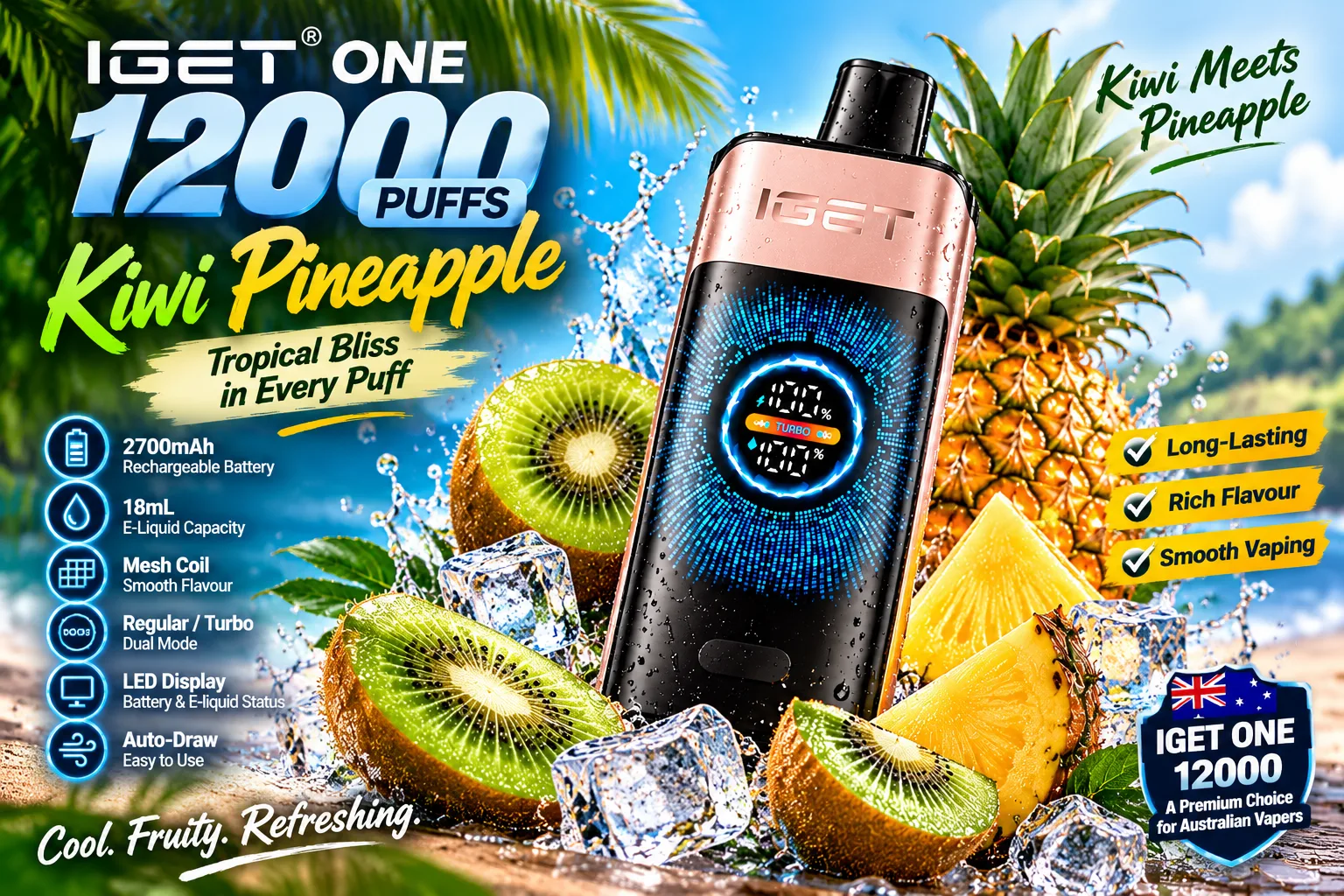
In manufactured flavour formulations, kiwi-like notes may be created using combinations of flavouring substances.
Therefore, the presence of the word "kiwi" does not establish that a product contains real kiwi fruit.
3. Understanding the Pineapple Flavour Concept
Pineapple has a different aromatic identity.
Compared with kiwi, pineapple is often associated with a more pronounced tropical fruit character.
Typical descriptions of fresh pineapple include:
Sweet tropical aroma.
Distinct acidity.
Bright fruit notes.
A recognisable sweet-and-tart profile.
These characteristics explain why pineapple is frequently used as a reference point in tropical flavour descriptions.
However, the actual balance of pineapple-related compounds in IGET ONE Kiwi Pineapple has not been independently established here.
4. Kiwi vs Pineapple: How Do Their Flavour Profiles Differ?
When analysing the product name, I find it useful to separate the characteristics of the two fruits.
CharacteristicKiwiPineappleFruit profileGreen and tangyTropical and aromaticTypical sweetnessMild to moderateModerate to pronouncedTypical acidityNoticeableDistinctAromaLight, green-fruit notesRecognisable tropical notesCommon flavour descriptionFresh and tartSweet and acidicThese comparisons describe the fruits themselves, not measured properties of the vaping product.
A flavour formulation may emphasise some characteristics while reducing or changing others.
5. Does Kiwi Pineapple Contain Real Fruit?
Not necessarily.
This is one of the most important distinctions to understand when reading fruit-flavoured product descriptions.
A flavour name is not an ingredient declaration.
A kiwi-and-pineapple-themed formulation may use natural flavouring substances, synthetic flavouring compounds or combinations of different ingredients.
Without authenticated product documentation or independent testing, the precise composition cannot be confirmed.
It is also important to remember that a substance being safe to consume as food does not automatically mean it is safe to inhale.
6. IGET ONE 12000 Device Features Explained
The IGET ONE 12000 is commonly advertised as a vaping device with a nominal maximum rating of 12,000 puffs.
Depending on the version, product descriptions also refer to features such as:
Rechargeable battery operation.
Mesh-coil heating technology.
Automatic draw activation.
Regular and Turbo operating modes.
Battery and device-status displays.
Exact specifications should be verified against reliable manufacturer documentation for the relevant product version.
Third-party listings may contain inconsistent information about battery capacity, liquid volume and internal components.
For that reason, I would avoid treating every advertised specification as independently verified.
7. What Does the 12,000-Puff Rating Mean?
The advertised puff count is another detail worth examining carefully.
A device labelled "12,000 puffs" is not guaranteed to provide exactly 12,000 inhalations.
Actual puff counts may vary according to several factors.
Puff duration
Longer inhalations may consume more electrical energy and e-liquid than shorter inhalations.
Operating mode
Different power settings may affect energy consumption and aerosol production.
Battery condition
Battery performance can change with age, temperature and operating conditions.
Device variation
Manufacturing differences and internal component characteristics can also affect real-world results.
As a result, puff-count figures should be interpreted as advertised estimates rather than precise guarantees.
8. Regular vs Turbo: What Is the Difference?
Some IGET ONE 12000 product descriptions refer to Regular and Turbo operating modes.
These names generally indicate different operating settings.
In vaping devices, changing electrical output may affect heating behaviour, energy consumption and aerosol generation.
However, the precise differences between these modes depend on the specific device design.
Without reliable technical documentation, it would be inappropriate to assign exact output levels or guaranteed performance characteristics to either mode.
9. Does Kiwi Pineapple Tell Us Anything About Nicotine Content?
No.
The flavour name does not establish whether a product contains nicotine or identify its concentration.
Likewise, the device's puff-count rating does not reveal nicotine content.
Accurate nicotine information requires reliable, product-specific documentation.
Consumers should not infer nicotine concentration from packaging colours, flavour names or device appearance.
10. What Australian Readers Should Know
Australia has strict regulations governing vaping products.
Vaping goods are regulated under a therapeutic supply framework, and ordinary non-pharmacy retail sale is prohibited.
Public advertising of vaping goods is also generally prohibited, subject to limited exceptions.
Australian therapeutic vaping product standards restrict permitted flavours to specified categories, including tobacco, mint and menthol.
Fruit-flavoured products such as Kiwi Pineapple are not among the permitted therapeutic flavour categories.
An authentic-looking product or recognisable brand name does not establish that a vaping device can legally be sold through ordinary retail channels in Australia.
For current requirements, readers should consult the Therapeutic Goods Administration (TGA).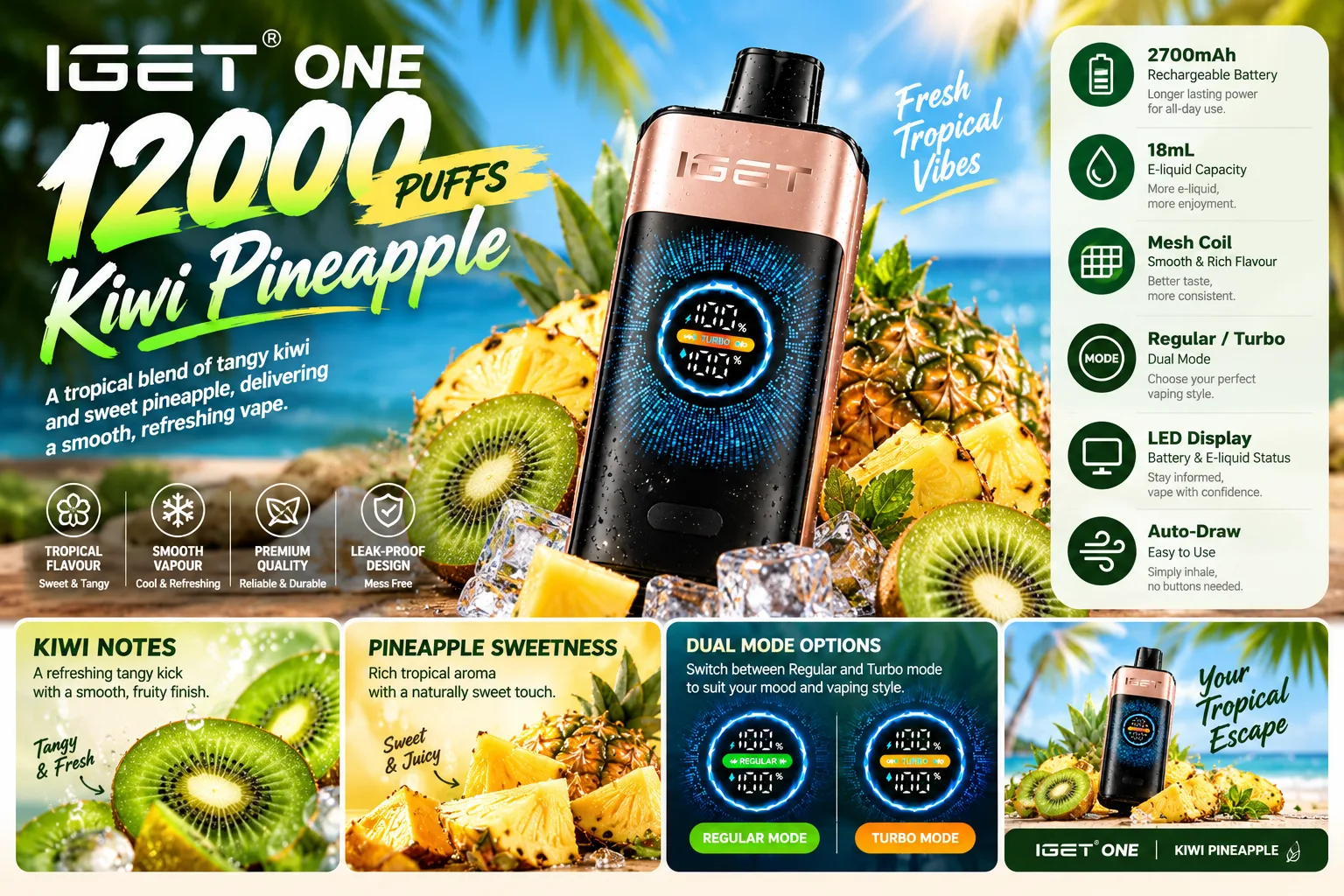
11. My Perspective on Kiwi Pineapple
What interests me about Kiwi Pineapple is the contrast between the two fruit concepts.
Kiwi is commonly associated with a lighter, tangier profile, while pineapple has a more pronounced tropical identity.
From a flavour-description perspective, the combination is straightforward to understand.
However, I would not claim that the actual vaping product has a particular sweetness level, cooling sensation or flavour intensity without a documented sensory assessment.
A product name can communicate an intended flavour category, but it cannot establish how closely the formulation resembles fresh fruit.
For me, that distinction is essential when evaluating product descriptions.