
Specifications Explained: Battery, Coil & Device Design
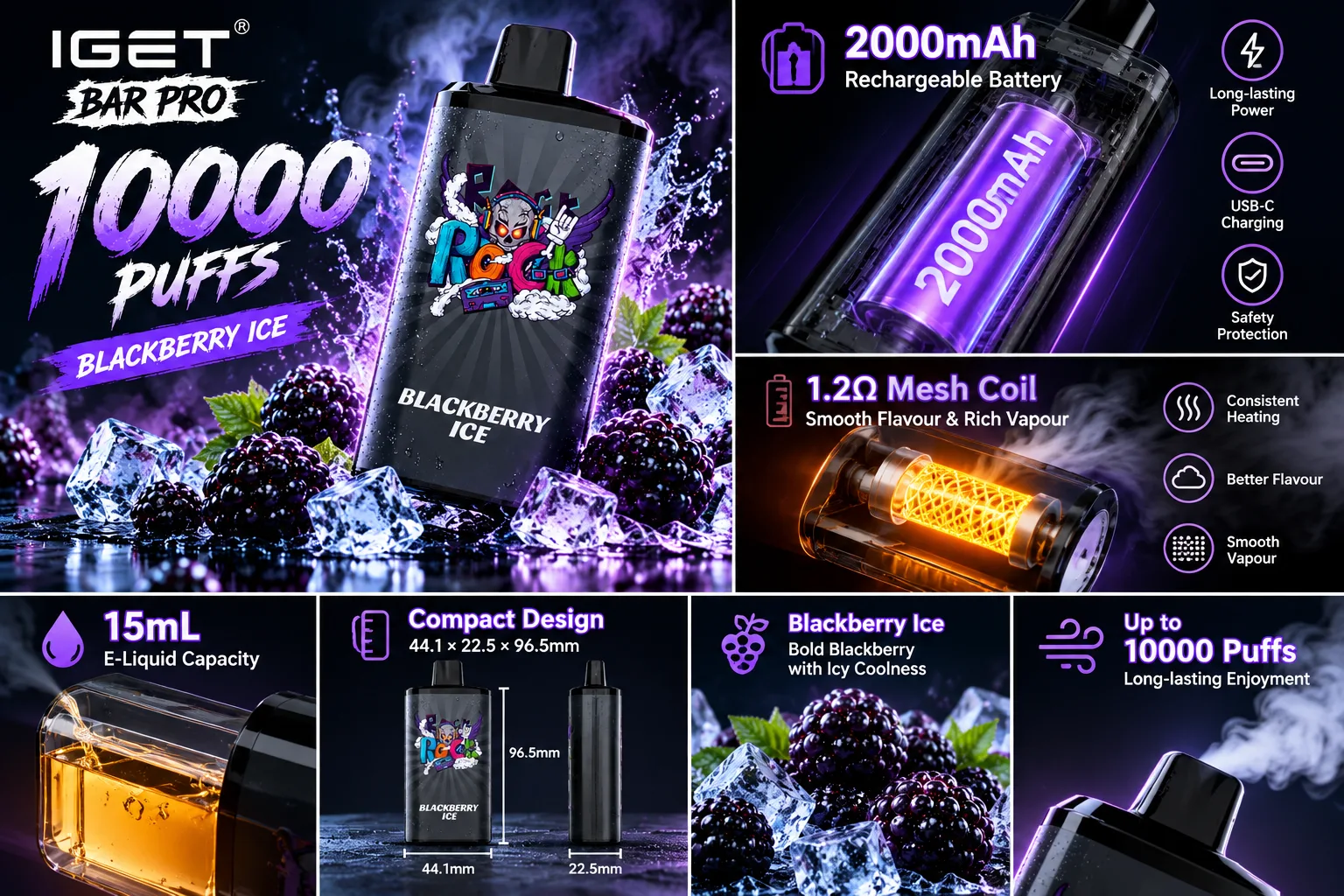
The IGET BAR PRO 10000 is a vaping device associated with a range of publicly advertised technical specifications, including a 2000mAh battery, a 1.2Ω mesh heating element and a nominal rating of up to 10,000 puffs.
But what do these figures actually mean?
Understanding device specifications requires more than reading the numbers printed on a product listing. Battery capacity does not directly determine operating time, coil resistance does not independently establish power consumption, and advertised puff counts are not guarantees of real-world performance.
This article examines the commonly published IGET BAR PRO 10000 specifications, explains their technical significance and outlines important regulatory and safety considerations for Australian readers.
1.  Specifications at a Glance
The following figures appear in third-party product listings. They should be treated as reported specifications rather than independently verified manufacturer measurements.
SpecificationCommonly reported detailProduct nameIGET BAR PRO 10000Advertised puff countUp to 10,000Battery capacity2000mAhHeating elementMesh coilCoil resistance1.2ΩE-liquid capacity15mL in some listingsDimensions44.1 × 22.5 × 96.5mmReported weightApproximately 93gHousing materialsPolycarbonate and aluminiumChargingUSB-C rechargeable in some listingsNicotine concentrationSome listings claim 50mg/mL (5%)These specifications have not been independently confirmed for every product version or manufacturing batch.
The nicotine concentration and e-liquid capacity should not be assumed accurate without reliable batch-specific documentation.
Importantly, the presence of a product specification does not establish that the device complies with Australian therapeutic vaping regulations.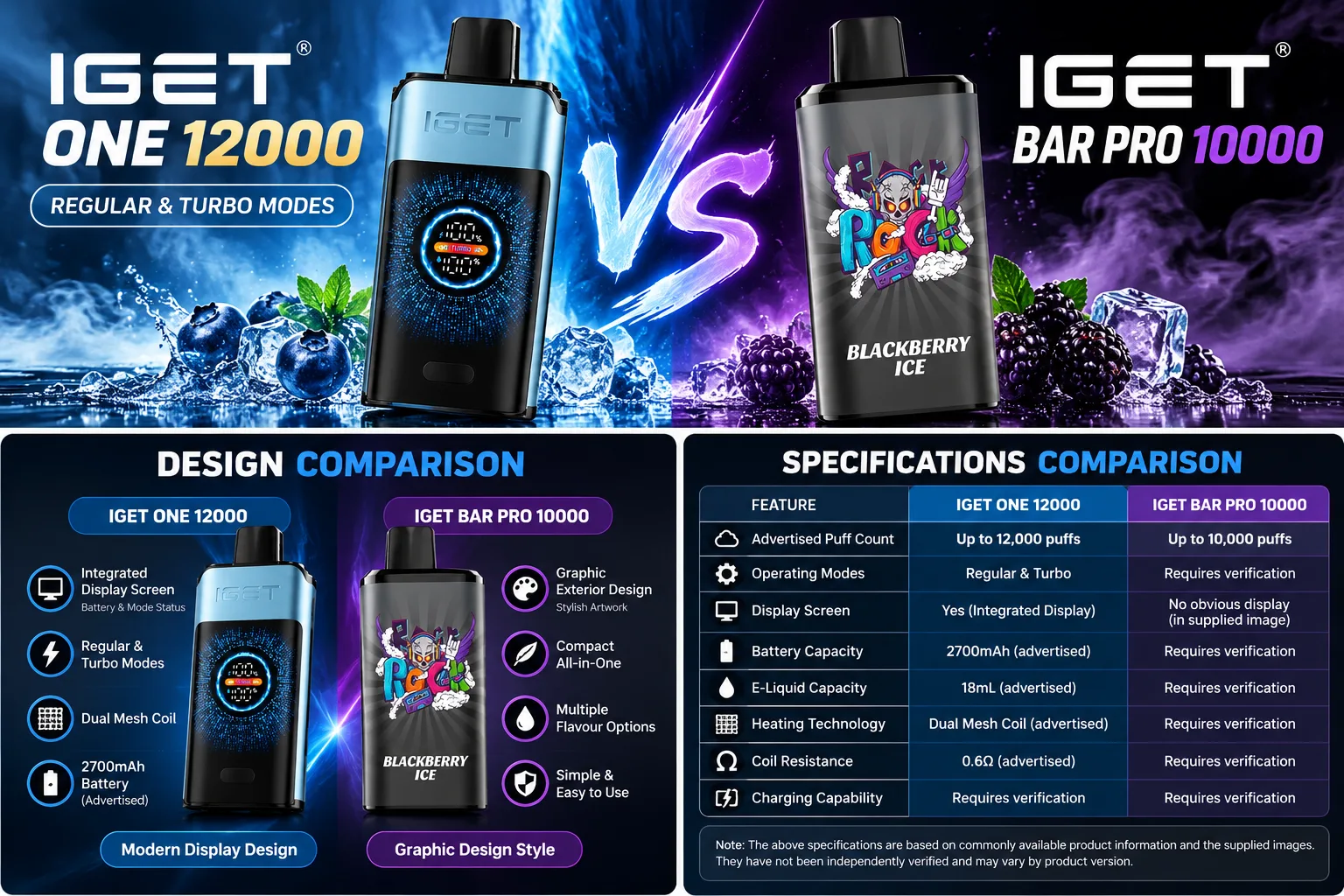
2. What Does the 10,000-Puff Rating Mean?
The number 10,000 refers to an advertised estimated puff count.
It is not a direct measurement of battery capacity or guaranteed device lifespan.
Actual puff count can vary depending on several factors:
Duration of each activation.
Electrical power delivered to the heating element.
E-liquid availability.
Battery condition.
Electronic operating limits.
Heating element and wicking performance.
For example, a device activated for four seconds at a time may consume more energy per activation than one operated for one second, assuming comparable electrical power.
This means two users could record different numbers of activations from otherwise identical devices.
Without a published and independently verified testing protocol, an advertised puff-count figure should be interpreted cautiously.
3. Understanding the Reported 2000mAh Battery
One of the commonly listed specifications for the IGET BAR PRO 10000 is a 2000mAh battery.
The abbreviation mAh stands for milliampere-hour.
It describes nominal electrical charge capacity rather than guaranteed operating time.
For a hypothetical lithium-ion battery with a nominal voltage of 3.7V, the approximate nominal energy can be calculated as:
Wh = (mAh × Voltage) ÷ 1000
Using the reported 2000mAh capacity:
(2000 × 3.7) ÷ 1000 = 7.4Wh
This calculation illustrates the relationship between electrical charge and stored energy. It does not establish the actual battery voltage, usable energy or runtime of a specific IGET BAR PRO device.
Actual battery performance depends on power consumption, electrical efficiency, temperature and battery condition.
4. What Is a 1.2Ω Mesh Coil?
Several product listings describe the IGET BAR PRO 10000 as using a 1.2-ohm mesh coil.
The symbol Ω represents ohms, a unit of electrical resistance.
A mesh heating element typically uses a patterned conductive surface rather than a conventional round-wire winding.
Its purpose is to convert electrical energy into heat.
The shape and resistance of a heating element can influence its electrical characteristics and temperature distribution.
However, coil resistance alone does not determine actual operating power.
The device's control electronics and applied voltage are also important.
For a simple resistive electrical circuit, power can be described by:
P = V² ÷ R
Where:
P represents power in watts.
V represents applied voltage.
R represents resistance in ohms.
Actual vaping devices may use electronic control systems, so this simplified equation does not establish their operating power without further technical information.
A mesh coil should not automatically be interpreted as evidence of superior performance or safety.
5. What Does the Reported 15mL E-Liquid Capacity Mean?
Some third-party listings describe the IGET BAR PRO 10000 as containing 15mL of e-liquid.
Millilitres measure liquid volume.
This figure is separate from the battery's mAh rating.
E-liquid capacity and battery capacity describe different parts of the device.
A device may stop operating because of insufficient battery energy, depletion of its liquid supply or an electrical malfunction.
A larger stated liquid capacity does not guarantee a specific puff count.
It is also important to recognise that e-liquid volume, ingredients and nicotine concentration can affect a product's regulatory status.
Australian therapeutic vaping goods must meet applicable product standards.
6. IGET BAR PRO 10000 Dimensions and Materials
Commonly published dimensions for the device are:
44.1 × 22.5 × 96.5mm
The reported weight is approximately 93g.
Some listings identify polycarbonate and aluminium as housing materials.
Polycarbonate is an engineering plastic used in many electronic products, while aluminium is a lightweight metal.
The presence of these materials does not independently establish structural durability, battery safety or compliance with electrical standards.
Product dimensions and materials should be checked against reliable manufacturer documentation where available.
7. Is the IGET BAR PRO 10000 Rechargeable?
Some product listings describe the IGET BAR PRO 10000 as having USB-C charging.
However, charging capability should be confirmed for the exact device version.
A USB-C connector describes a physical connector type. It does not establish the battery's charging current, charging duration or charging safety characteristics.
Lithium-ion batteries require appropriate charging control and protection.
Never attempt to recharge a device that is not explicitly designed for recharging.
Do not charge a device that is damaged, swollen, leaking or unusually hot.
Sealed electronic devices should not be dismantled or modified to access their internal batteries.
8. Why Might Published IGET BAR PRO Specifications Differ?
Product specifications can vary between online listings for several reasons.
Possible explanations include:
Inaccurate third-party descriptions.
Differences between product revisions.
Regional variations.
Outdated information.
Unverified product claims.
Counterfeit or mislabelled products.
A familiar product name or packaging design does not guarantee that all internal components are identical.
For reliable identification, technical claims should be compared with manufacturer-issued documentation and relevant batch information.
Consumers should also avoid assuming that a working QR code independently proves product authenticity or legal compliance.
9. IGET BAR PRO 10000 and Australian Regulations
Australia regulates vaping goods under a national therapeutic vaping framework.
Under this framework, ordinary non-pharmacy retailers cannot legally supply vaping goods to consumers.
Legal supply is restricted to participating pharmacies, subject to relevant therapeutic product standards and other requirements.
The reforms also prohibit the domestic supply of disposable single-use and non-therapeutic vapes outside applicable exceptions.
A product's authenticity, advertised battery capacity or technical specifications do not make it legally available for ordinary retail sale.
In addition, a nicotine concentration of 50mg/mL, where accurately stated, exceeds the 20mg/mL threshold for pharmacist-only supply without a prescription. Prescription requirements and other regulatory conditions must also be considered.
Australian readers should consult the Therapeutic Goods Administration for current information rather than relying on commercial product descriptions.
10. Battery Safety and Responsible Disposal
Devices containing lithium-ion batteries can create safety and environmental risks if damaged or incorrectly discarded.
Basic precautions include:
Avoid exposing battery-powered devices to excessive heat.
Do not leave devices inside hot vehicles.
Never puncture, crush or dismantle a sealed battery.
Do not attempt unsupported charging or battery repairs.
Stop using a device that becomes unusually hot.
Keep damaged or swollen batteries away from combustible materials and seek appropriate safety advice.
Vaping devices containing embedded batteries should not be placed in household rubbish or ordinary kerbside recycling.
Australian consumers should contact their local council or an authorised e-waste collection provider to confirm suitable disposal arrangements.
Not all battery recycling facilities accept complete vaping devices.