
Summary: Water inside a vape can damage electrical connections, interfere with its control circuit and compromise battery safety. A device may stop working, display errors or activate unexpectedly. If water may have entered the electronics or battery compartment, stop using and charging it. A dry exterior does not confirm that the device is safe.
Can Water Damage a Vape?
Yes. Vapes contain electrical components and typically a lithium-ion battery. Water entering the casing can interfere with electrical operation, contribute to corrosion and create a short-circuit risk.
The outcome depends on where the water entered, the extent of exposure and the device’s construction. A minor splash on the outside is different from full immersion, but visible appearance alone cannot establish whether internal damage has occurred.
Manufacturer cleaning guidance also distinguishes the electronic device from removable parts: Innokin advises against submerging its battery or mod in water. 
What Problems Can Water Inside a Vape Cause?
Electrical Faults
Moisture can affect connections and electronic components. Possible symptoms include an unresponsive screen, intermittent operation or error messages.
Sensor or Button Malfunctions
Water near the activation system may interfere with normal operation. Unexpected activation or continued heating should be treated as a fault, rather than something to test repeatedly.
Corrosion and Delayed Problems
A device may appear to work immediately after exposure but develop faults later. Drying the surface does not remove contamination or prove that internal components are undamaged.
Battery Safety Risks
Water exposure is also a battery-safety concern. Fire and Rescue NSW identifies batteries that have become wet or been in water as requiring attention, and advises never using or charging damaged batteries.
What Should You Do If Your Vape Gets Wet?
If you suspect water has entered the device, stop using it and do not connect it to a charger.
For a device that is cool, stable and not showing signs of battery failure:
- Switch it off if you can do so safely. Do not repeatedly press the firing button to check whether it works.
- Disconnect charging power safely. If mains equipment or the surrounding area is wet, avoid touching it and seek assistance.
- Gently wipe the exterior dry. Do not push cloth, tools or other objects into openings.
- Follow the manufacturer’s water-exposure instructions. Explain whether the device was splashed, submerged or exposed to salt water.
- Seek assessment or disposal advice. Do not assume a sealed device can be repaired at home.
If it is safe to leave the device in place, keep it away from combustible materials, children and pets while obtaining advice.
Can You Use a Vape After It Dries?
There is no universal drying time that makes a water-exposed vape safe.
Waiting 24 or 48 hours does not establish that the battery, control board or internal contacts are undamaged. The device turning on is also not a safety test.
Avoid attempting to dry it with a hairdryer, oven, microwave or direct heat. Do not charge it to “see if it recovers”, dismantle a sealed casing or bypass its protection features.
Australian battery-safety guidance warns against using or charging damaged batteries.
Is a Water-Resistant Vape Waterproof?
Not necessarily. Some devices have an ingress-protection rating, but protection applies only under the manufacturer’s specified conditions.
Check which parts the rating covers and any restrictions relating to immersion. A rating should not be assumed to cover every pod, tank, charging opening or exposure scenario. Damage and wear may also affect protective seals.
Innokin, for example, describes water resistance for particular models rather than for all vaping devices. Always consult the exact model’s documentation.
Warning Signs That Require Immediate Action
Stop handling the device if it develops:
- Rapid or unusual heating.
- Swelling or a distorted casing.
- Leaking from the battery area.
- Hissing, popping, smoke or escaping gas.
- Flames.
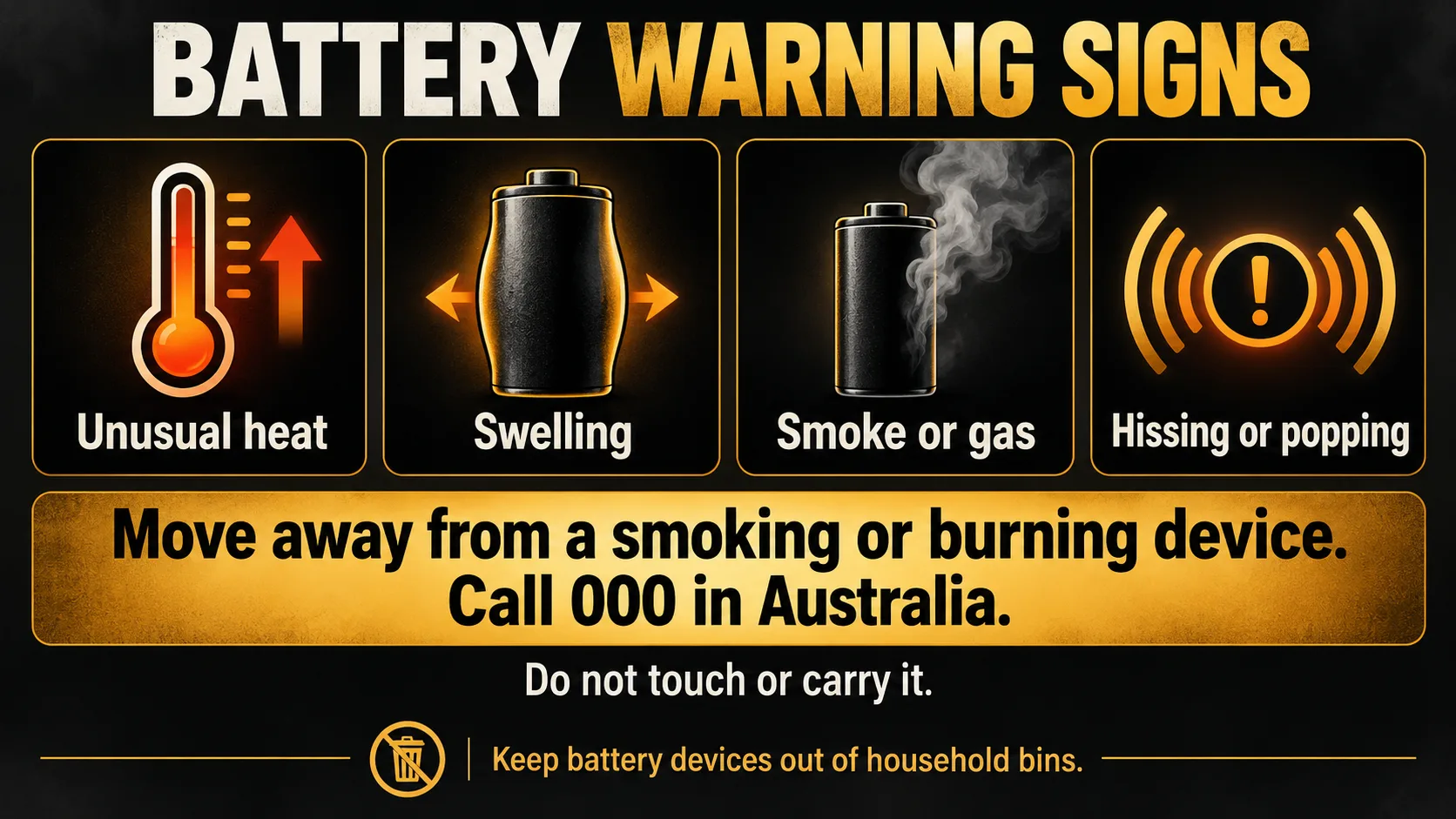
If it is smoking, emitting gas or burning, move away, alert others and call Triple Zero (000) in Australia. Do not pick it up or carry it through the building. Follow emergency-service instructions and avoid breathing the fumes. Fire and Rescue NSW warns against touching devices emitting gas or vapour, or devices that may be on fire.
How Should You Dispose of a Water-Damaged Vape in Australia?
Do not place a vape containing a lithium-ion battery in a household rubbish or kerbside recycling bin.
Contact your local council or an appropriate hazardous-waste service before taking it anywhere. Explain that it is a water-damaged vape with an embedded battery, because damaged devices may require special arrangements and may not be accepted at ordinary battery collection points.
Do not transport a device that is hot, smoking or emitting gas. Australian guidance directs lithium-ion batteries away from household bins and towards appropriate collection services.