
How to Avoid Online Shopping Scams in Australia: 10 Tips I Always Check Before Ordering
Online shopping has become part of everyday life in Australia. Whether I'm looking for electronics, clothing, home essentials or something difficult to find locally, ordering online is often convenient.
But there's one thing I always think about before entering my payment details: Can I actually trust this website?
A professional-looking website doesn't automatically mean a trustworthy business. Fake stores can use convincing product photos, attractive prices and customer reviews to appear legitimate.
Over time, I've developed a simple checklist for assessing online stores before placing an order.
Here are the 10 things I would recommend checking.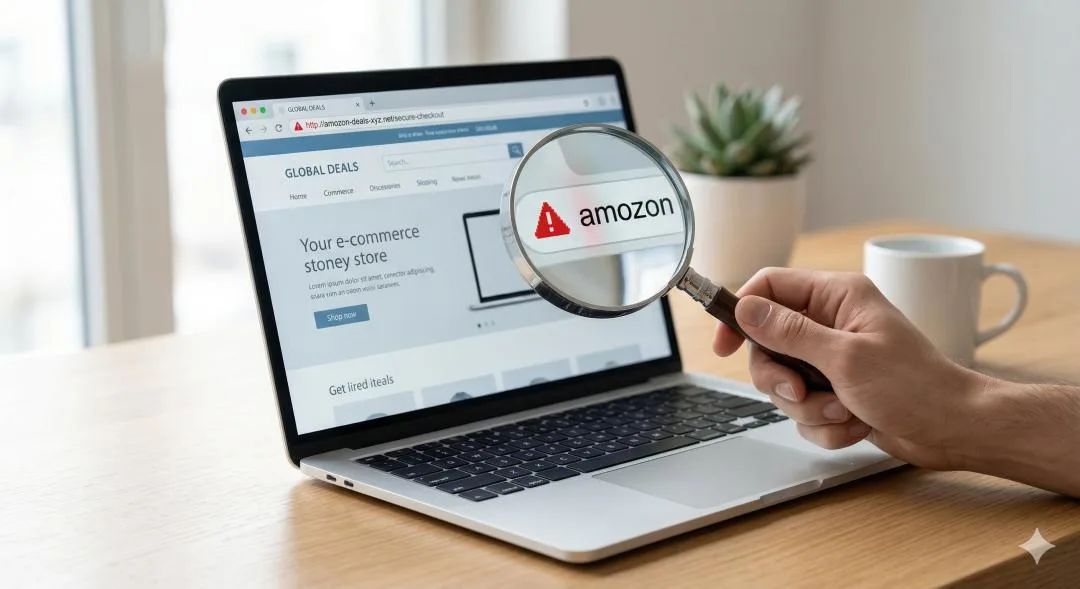
1. Check the Website Address Carefully
The first thing I look at is the domain name.
Some fraudulent websites imitate legitimate brands by changing just one letter or adding an unusual word to the address.
For example, a fake store might use a similar-looking domain to impersonate a genuine retailer.
I check for spelling mistakes, unusual extensions and suspicious redirects.
An HTTPS connection is important for protecting information in transit, but HTTPS alone does not prove a store is legitimate.
2. Look for Genuine Business Information
Before ordering, I check whether the website provides:
A business name
A working contact method
A clear returns policy
Shipping and delivery information
Terms and conditions
A privacy policy
For businesses claiming to be registered in Australia, I may also check their Australian Business Number through the official ABN Lookup service.
An ABN is useful evidence to investigate, but it doesn't guarantee that the website belongs to the registered business.
3. Be Careful with Prices That Look Too Good to Be True
Everyone likes a bargain, but an extremely low price can be a warning sign.
If most websites sell a product for around AU$100 and another unfamiliar store advertises it for AU$20, I want to understand why.
Sometimes discounts are genuine. Other times, scammers use unrealistic prices to encourage quick payments.
I compare several retailers before making a decision.
4. Search for Independent Customer Reviews
I don't rely entirely on reviews displayed on the seller's own website.
Instead, I search Google for the business name alongside terms such as:
Reviews
Scam
Complaints
Delivery experience
I also look at the quality of the reviews.
A large number of vague five-star reviews posted within a short period can be suspicious.
Independent reviews aren't perfect, but they can help identify patterns of complaints.
5. Check the Payment Options
Payment security is one of my biggest priorities.
Where available, I prefer established payment services that offer dispute processes, such as credit cards or eligible PayPal transactions.
I become cautious when a seller insists on unusual payment methods, including gift cards, cryptocurrency or transfers to unrelated accounts.
Payment protections depend on the provider, transaction and circumstances, so no method guarantees a refund.
6. Read the Shipping and Refund Policies
Before placing an order, I check the estimated delivery timeframe and what happens if the item doesn't arrive.
A reliable website should explain shipping costs, dispatch times and how customers can raise delivery problems.
I also read the returns policy rather than assuming every purchase can be refunded for any reason.
Australian Consumer Law provides consumer guarantees for eligible purchases, but the practical process may be more complicated when dealing with overseas sellers.
7. Don't Trust Social Media Advertisements Automatically
I've seen online advertisements that look professional enough to belong to established retailers.
However, an advertisement appearing on Facebook, Instagram or another platform doesn't prove the seller is genuine.
If I find an unfamiliar store through an advertisement, I independently research the business before purchasing.
I also avoid making payments through unexpected links sent by private message.
8. Be Suspicious of Pressure to Pay Immediately
Messages such as "Only five minutes left!" or "Pay now or lose your order!" can create unnecessary urgency.
Limited-time promotions do exist, but pressure should never replace proper checks.
If a website makes me feel rushed, I leave the page and research it first.
A genuine purchasing decision should allow enough time to verify the seller.
9. Keep Records of Your Order
Whenever I shop online, I keep copies of important information.
This includes the order confirmation, product description, payment receipt and any communication with the seller.
Screenshots can be particularly useful if the website later changes its product listing or policies.
These records may help when contacting the business, payment provider or consumer protection authorities.
10. Know What to Do If Something Goes Wrong
If I suspected an online shopping scam, I would act quickly rather than wait for the seller to respond indefinitely.
The main steps would be:
Contact my bank or payment provider immediately.
Ask whether a transaction can be stopped or disputed.
Change passwords if account details may have been compromised.
Save receipts, screenshots and messages.
Report the incident to Australia's Scamwatch service.
If identity documents or sensitive personal information were exposed, IDCARE can provide specialist support.