
IGET ONE 12000 Puffs – Kiwi Pineapple Flavour Review
Introduction
Whenever a product carries a tropical fruit flavour name, the first question worth asking is what the name actually tells us about the formulation.
The IGET ONE 12000 Kiwi Pineapple is a good example. Kiwi and pineapple are familiar fruits, but their flavour characteristics are quite different.
Kiwi is commonly associated with a slightly tangy, green-fruit profile. Pineapple is known for its distinctive tropical aroma and sweet-acidic character.
Put the two names together and you get a flavour concept that is easy to picture. Picturing it and knowing how a manufactured product tastes, though, are two different things.
In this review we look at the Kiwi Pineapple flavour concept, the commonly advertised features of the IGET ONE 12000, what its puff-count rating means, and the Australian regulations readers should understand.
This is not a hands-on taste test.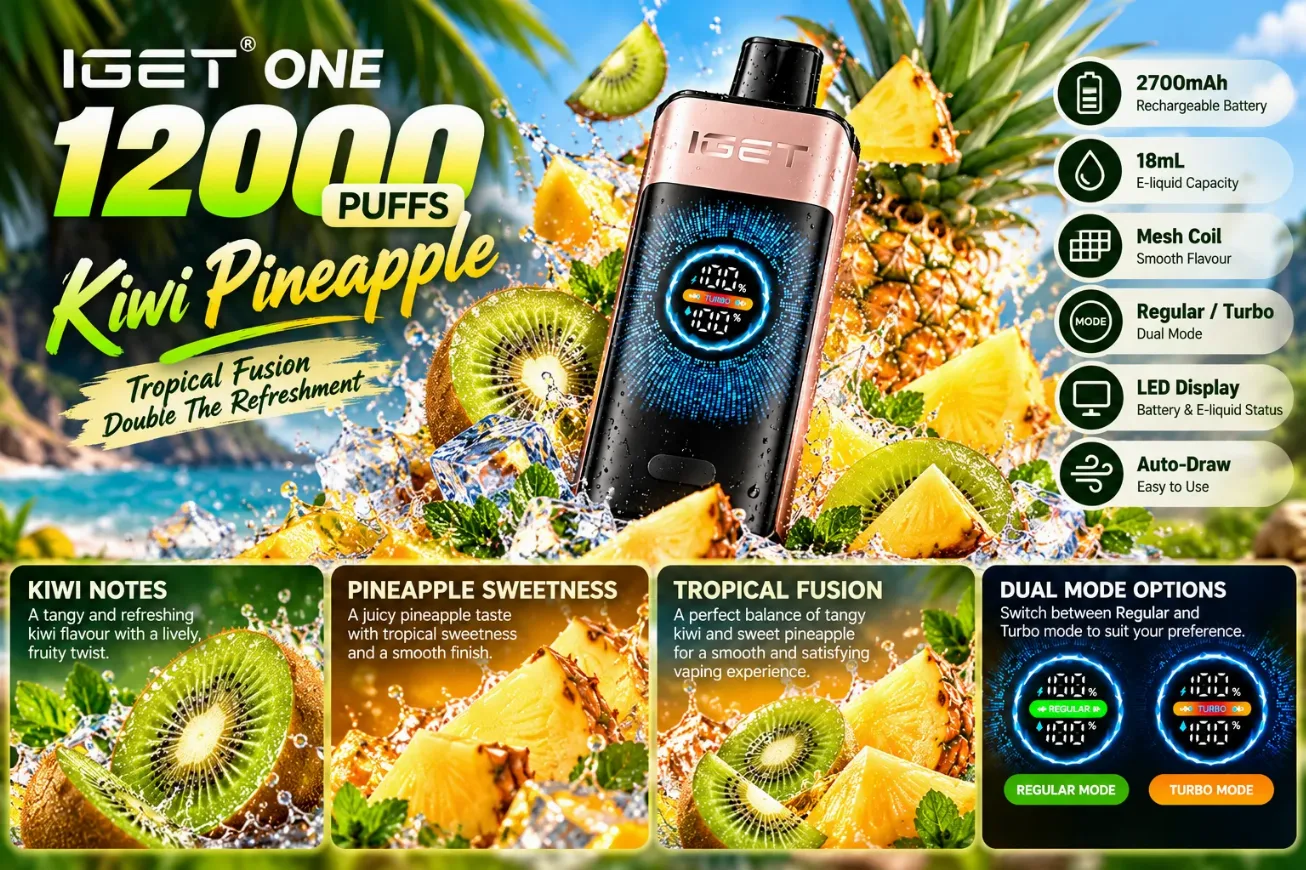
1. What Is IGET ONE 12000 Kiwi Pineapple?
Kiwi Pineapple is a named flavour variant associated with the IGET ONE 12000 vaping device family.
The product name carries two separate elements.
IGET ONE 12000 identifies the device range and its advertised maximum puff-count category.
Kiwi Pineapple identifies the intended fruit flavour concept.
The name suggests a combination of kiwi-related and pineapple-related aromatic characteristics. It does not confirm the exact ingredients used.
A manufactured fruit flavour may be built from a blend of aromatic compounds rather than extracts of the fruits named on the packaging.
2. Understanding the Kiwi Flavour Concept
One reason kiwi shows up so often in mixed-fruit descriptions is its balance of sweetness and acidity.
Fresh kiwi fruit is generally associated with:
Mild to moderate sweetness.
Noticeable tartness.
Green-fruit aromatic notes.
A slightly acidic finish.
How strong these characteristics are depends on the variety and the ripeness of the fruit.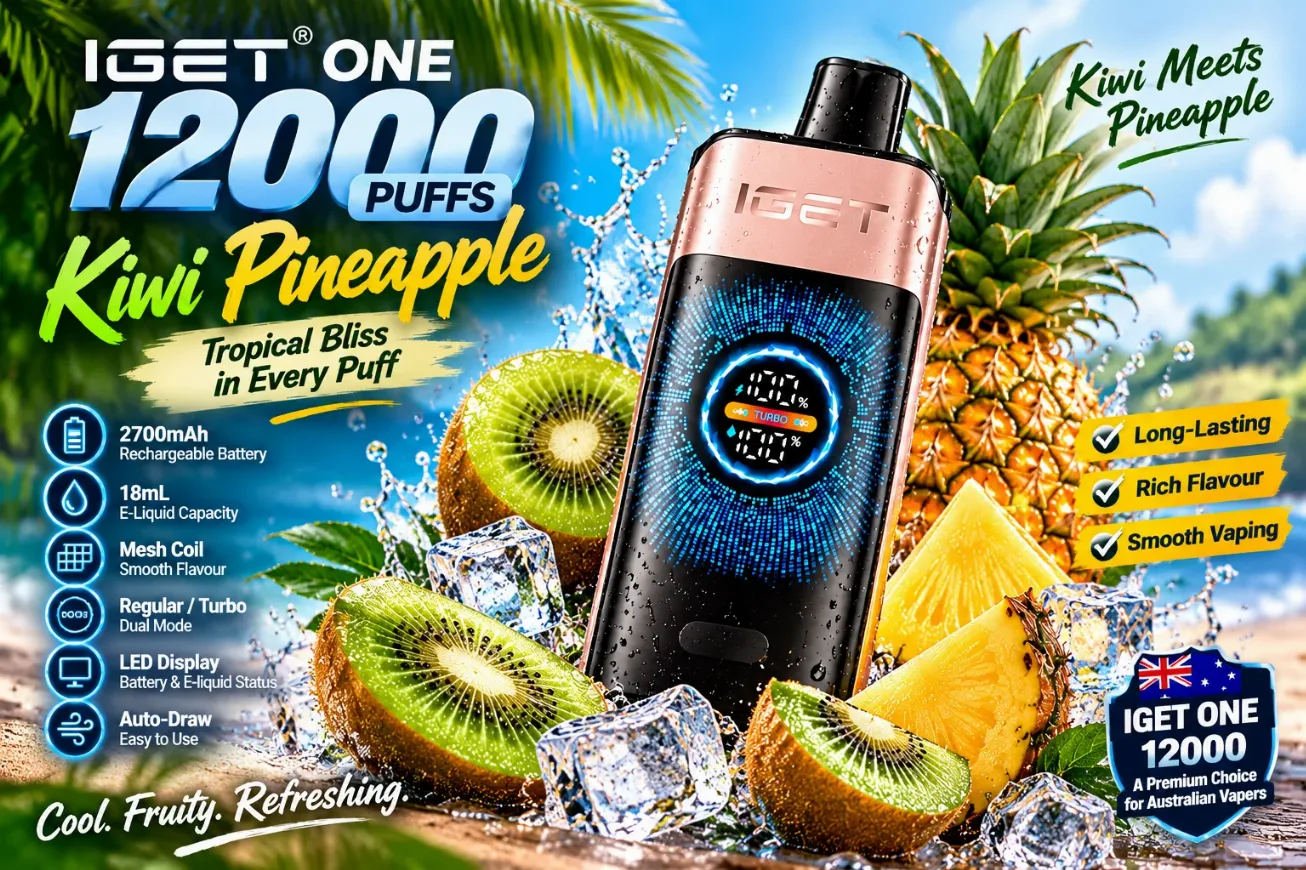
In manufactured flavour formulations, kiwi-like notes may be created from combinations of flavouring substances.
So the word "kiwi" on a label does not establish that the product contains real kiwi fruit.
3. Understanding the Pineapple Flavour Concept
Pineapple has a different aromatic identity.
Compared with kiwi, pineapple carries a more pronounced tropical character.
Typical descriptions of fresh pineapple include:
Sweet tropical aroma.
Distinct acidity.
Bright fruit notes.
A recognisable sweet-and-tart profile.
These traits explain why pineapple is such a common reference point in tropical flavour descriptions.
The actual balance of pineapple-related compounds in IGET ONE Kiwi Pineapple has not been independently established here, though.
4. Kiwi vs Pineapple: How Do Their Flavour Profiles Differ?
When analysing the product name, it helps to separate the two fruits:
| Characteristic | Kiwi | Pineapple |
|---|---|---|
| Fruit profile | Green and tangy | Tropical and aromatic |
| Typical sweetness | Mild to moderate | Moderate to pronounced |
| Typical acidity | Noticeable | Distinct |
| Aroma | Light, green-fruit notes | Recognisable tropical notes |
| Common flavour description | Fresh and tart | Sweet and acidic |
These comparisons describe the fruits themselves, not measured properties of the vaping product.
A flavour formulation may emphasise some characteristics while reducing or changing others.
5. Does Kiwi Pineapple Contain Real Fruit?
Not necessarily.
This is one of the most important distinctions to understand when reading fruit-flavoured product descriptions.
A flavour name is not an ingredient declaration.
A kiwi-and-pineapple-themed formulation may use natural flavouring substances, synthetic flavouring compounds or a mix of ingredients. Without authenticated product documentation or independent testing, the precise composition cannot be confirmed.
One more thing worth remembering: a substance that is safe to eat is not automatically safe to inhale.
6. IGET ONE 12000 Device Features Explained
The IGET ONE 12000 is commonly advertised as a vaping device with a nominal maximum rating of 12,000 puffs.
Depending on the version, product descriptions also refer to features such as:
Rechargeable battery operation.
Mesh-coil heating technology.
Automatic draw activation.
Regular and Turbo operating modes.
Battery and device-status displays.
Exact specifications should be verified against reliable manufacturer documentation for the relevant product version.
Third-party listings often disagree about battery capacity, liquid volume and internal components.
For that reason, treat every advertised specification as unverified until you can check it.
7. What Does the 12,000-Puff Rating Mean?
The advertised puff count deserves the same scrutiny.
A device labelled "12,000 puffs" is not guaranteed to deliver exactly 12,000 inhalations. Actual counts vary with several factors.
Puff duration
Longer inhalations may consume more electrical energy and e-liquid than shorter ones.
Operating mode
Different power settings may affect energy consumption and aerosol production.
Battery condition
Battery performance changes with age, temperature and operating conditions.
Device variation
Manufacturing differences and internal component characteristics also affect real-world results.
Read puff-count figures as advertised estimates, not precise guarantees.
8. Regular vs Turbo: What Is the Difference?
Some IGET ONE 12000 product descriptions refer to Regular and Turbo operating modes.
These names generally indicate different operating settings. Changing electrical output may affect heating behaviour, energy consumption and aerosol generation.
The precise differences depend on the specific device design. Without reliable technical documentation, it would be guesswork to assign exact output levels or guaranteed performance to either mode.
9. Does Kiwi Pineapple Tell Us Anything About Nicotine Content?
No.
The flavour name does not establish whether a product contains nicotine or identify its concentration. The puff-count rating does not reveal nicotine content either.
Accurate nicotine information requires reliable, product-specific documentation.
Do not infer nicotine concentration from packaging colours, flavour names or device appearance.
10. What Australian Readers Should Know
Australia regulates vaping products strictly.
Vaping goods fall under a therapeutic supply framework, and ordinary non-pharmacy retail sale is prohibited. Public advertising of vaping goods is also generally prohibited, subject to limited exceptions.
Australian therapeutic vaping product standards restrict permitted flavours to specified categories, including tobacco, mint and menthol.
Fruit-flavoured products such as Kiwi Pineapple are not among the permitted therapeutic flavour categories.
An authentic-looking product or recognisable brand name does not establish that a device can legally be sold through ordinary retail channels in Australia.
For current requirements, consult the Therapeutic Goods Administration (TGA).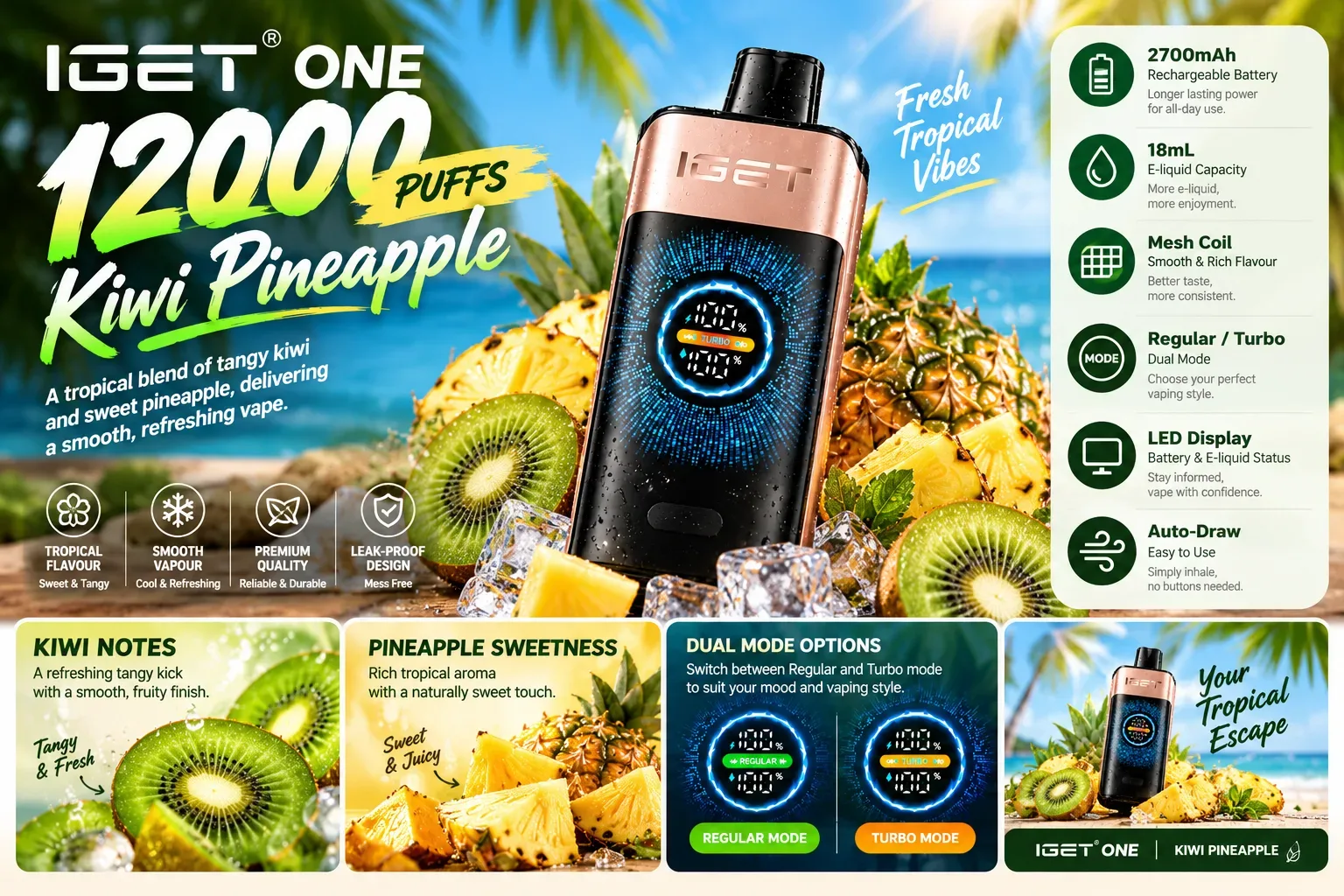
11. My Perspective on Kiwi Pineapple
What interests me about Kiwi Pineapple is the contrast between the two fruit concepts.
Kiwi is commonly associated with a lighter, tangier profile. Pineapple carries a more pronounced tropical identity.
As a flavour description, the combination is easy to understand.
Still, I would not claim the actual product has a particular sweetness level, cooling sensation or flavour intensity without a documented sensory assessment.
A product name communicates an intended flavour category. It cannot establish how closely the formulation resembles fresh fruit, and that distinction matters when you are weighing up any product description.